





RECURRING QUESTIONS ABOUT ESBE'S PRODUCTS PART 2
2026-08-25

Our customer support is the hub of our operations, whether you contact us in Sweden or via our sales offices across Europe. Here, we continue to guide you through the most frequently asked questions that our teams receive.
1. HOW DO I CHANGE THE OPERATING DIRECTION OF MY CONTROLLER/ACTUATOR?
It depends on whether you have a basic actuator or an intelligent controller.
Important: Always disconnect the power supply before opening the cover and be careful when handling the printed circuit card to avoid static electricity and damage to sensitive components.
We start with ESBE's actuators:
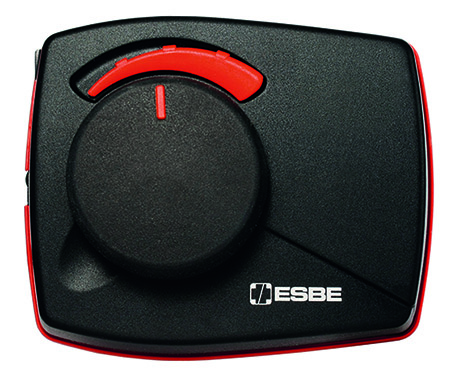
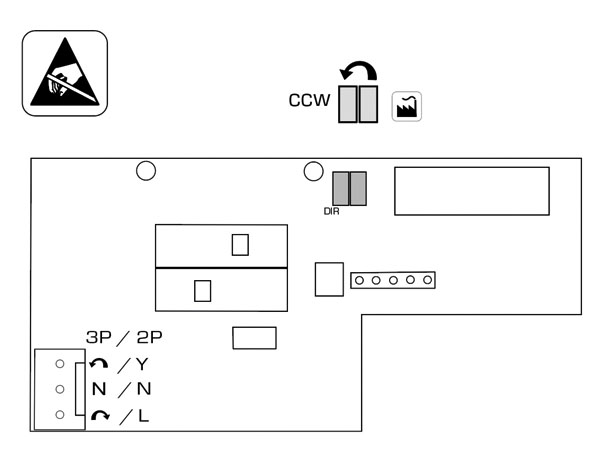
ARA600, 2-point
Change the direction by shifting the position of the shorting jumpers on the printed circuit card. By moving them from horizontal to vertical position (or vice versa), the motor's direction of rotation is inverted.
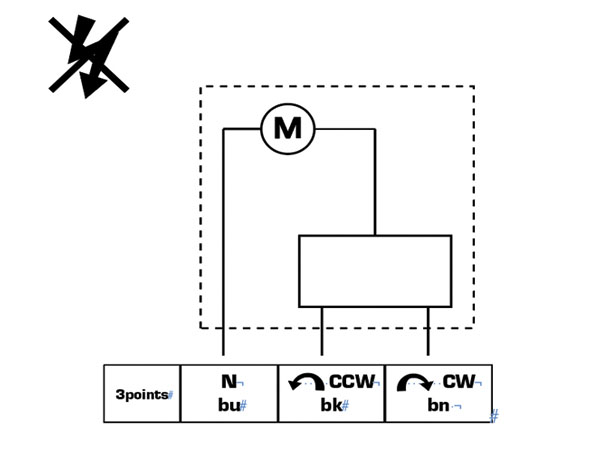
ARA600, 3-point
You change the motor's direction of rotation by swapping the places of the black and brown wires in the actuators connection.
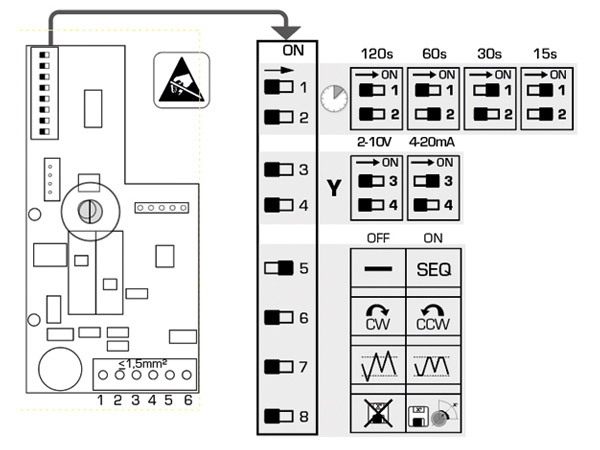
ARA600, proportional:
On/off on DIP switch 6 - ARA639
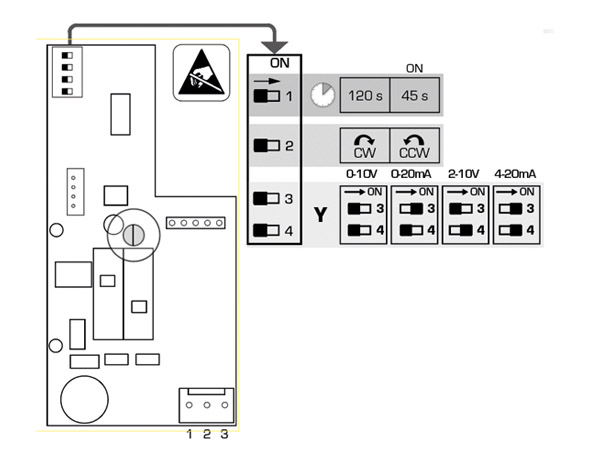
ARA600, proportional:
On/off on DIP switch 2 - ARA659
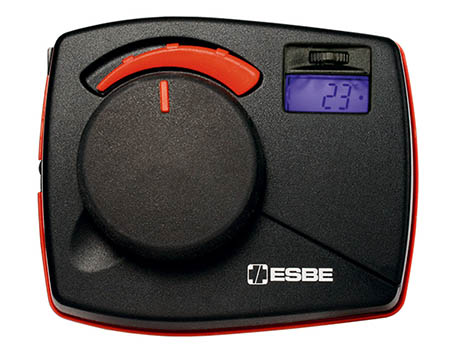
Do this for ESBE controllers series CRx:
● Disconnect the power supply.
● Push the operating lever to the right for clockwise or to the left for counterclockwise opening.
● Hold the lever in the desired direction and reconnect the power supply.
● Continue holding the lever in the correct direction for two seconds and then release it. The direction is now set. You can see the icon for the opening direction on the display to verify the change.
You can find more information in the user instructions in the packaging or on the website.
2. WHICH MIXING VALVE SHOULD I CHOOSE FOR A SYSTEM WITH HOT WATER CIRCULATION (HWC)?
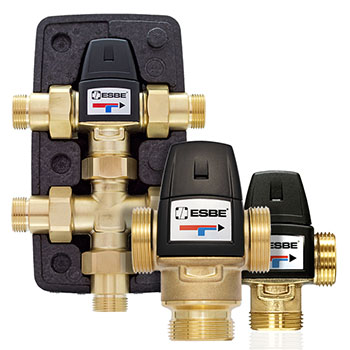
When you have HWC where a valve is required that can handle the constant flow and temperature variations that occur, we recommend our complete circulation set series VTR300.
You can also use VTA320 or VTA520, depending on the flow capacity required. These are specially developed for hot water circulation. They are "fast" in their response and can handle the differential pressures that can occur when the circulation pump is working. These alternatives provide options depending on whether you want a complete solution = VTR300 or just the valve itself.
One of the absolute most common questions we encounter when talking to installers out in the field is:
3. HOW DO I GET THE QUICKEST ANSWERS TO MY TECHNICAL QUESTIONS ABOUT ESBE PRODUCTS?
Here are the best tips:
● Go directly to ESBE's FAQ page to find proven solutions and guidance for the most common installation steps.
● Visit ESBE's YouTube channel directly if you want to see how a physical installation is done. ESBE has many great explanatory "How-to" videos.
● Save your favorites: Create a bookmark folder on your mobile phone with direct links to the technical manuals for the ESBE products you install most often.
● Use the ESBE app: It is the most convenient tool to quickly find the right valve series, Kvs value, and technical documentation for your project. You also get access to interactive guides that explain how the valve works internally to proportion and regulate heat flows, making installation both easier and more understandable.
● Be specific when searching the web, always write the full series name (e.g., "ESBE VRG131 installation"). You will get direct hits to the right pages and avoid having to filter out irrelevant search results.
That's all for this time, but we have more solutions and tips in store. Keep an eye out in the future – we will continue to share our customers' most common challenges and the best ways to solve them.
You can find previous tips here:
RECURRING QUESTIONS ABOUT ESBE'S PRODUCTS PART 1 >>